AI Meal Plans for Weight Loss: Study Insights

AI Meal Plans for Weight Loss: Study Insights
AI meal plans are reshaping weight loss strategies by offering tailored dietary recommendations based on personal data like age, health conditions, and food preferences. These systems, powered by advanced algorithms, aim to make weight management more accessible and efficient. Key findings include:
- Effectiveness: AI tools like GenAIS™ helped users lose 12.3% of body weight over 180 days, outperforming physician-guided methods (7.2%).
- Accuracy: ChatGPT-4-designed diets stayed within 20% of target calorie counts, unlike other platforms.
- Challenges: AI sometimes prioritizes preferences over health needs, struggles with portion guidance, and suggests costly ingredients.
- Safety Concerns: Errors like recommending unsafe foods for medical conditions highlight the need for human oversight.
- User Engagement: Active participation, such as frequent app interactions, significantly boosts success rates.
While AI tools show promise, combining them with expert supervision ensures safer, more effective results.
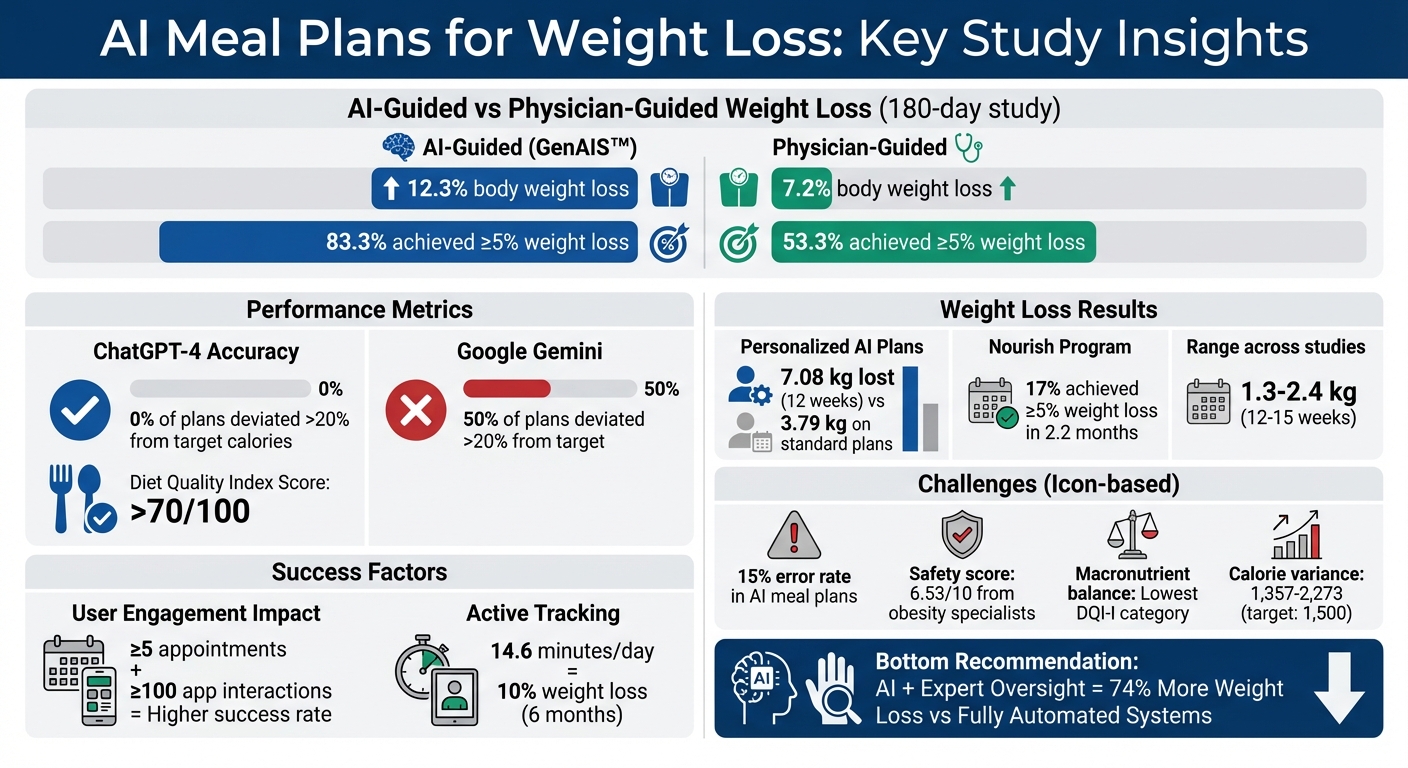
AI vs Traditional Weight Loss Methods: Key Performance Metrics and Success Rates
Study Findings on AI Meal Planning Systems
How AI Systems Build Personalized Meal Plans
AI meal planning tools, powered by Large Language Models (LLMs) like ChatGPT-4, create tailored dietary recommendations by analyzing inputs like medical history, food allergies, and cultural preferences. For example, if a user has chronic kidney disease, GERD, and a preference for Spanish cuisine, the system works to balance these factors when generating meal plans.
Some advanced systems take it a step further by allowing users to test different macronutrient ratios, such as low-carb versus low-fat diets. Research into Personalized Behavioral Weight Loss (PBWL) programs found that participants using AI-guided, experimentally-derived plans lost more weight - an average of 7.08 kg over 12 weeks compared to 3.79 kg on standard plans. As Caitlin E. Martinez et al. put it:
"The search for the 'ideal' weight loss approach across the population is less effective than identifying the 'ideal' approach for the individual." - Caitlin E. Martinez et al.
Many systems also incorporate data from wearable devices like glucose monitors, smart scales, and activity trackers, offering real-time feedback on how specific foods impact blood sugar and weight. This integration helps refine recommendations to better match an individual’s biological and behavioral patterns, moving toward a more personalized approach to nutrition.
Performance Metrics and Results
AI-generated meal plans are showing promise, but their accuracy can vary. In one study, AI systems designed 1,500-calorie diets, but the actual calorie counts ranged from 1,357 to 2,273. ChatGPT-4 stood out for its precision, with none of its plans deviating more than 20% from the target calorie level. In contrast, 50% of Google Gemini’s plans missed the mark by the same margin.
Weight loss outcomes have been particularly encouraging. Between January 2024 and June 2025, a study involving 60 adults (ages 40–60, BMI ≥ 25) tested an AI platform called GenAIS™, which used whole-genome sequencing and serum metabolomics. Participants using the AI-guided approach lost an average of 12.3% of their body weight over 180 days, compared to 7.2% in the physician-guided group. Additionally, 83.3% of the AI group achieved clinically significant weight loss (at least 5%), compared to 53.3% in the standard care group.
However, AI systems still face challenges in achieving balanced nutrition. While they score above 70 on the Diet Quality Index-International (DQI-I), their lowest-rated category is macronutrient balance. For instance, ChatGPT-4-generated menus tend to be higher in fat and protein but lower in carbohydrates and fiber compared to those created by professional dietitians.
Real-World Use and Challenges
Despite promising results, applying AI meal planning in real-world scenarios highlights some limitations. In March 2024, researchers at Brigham and Women's Hospital evaluated ChatGPT-4’s ability to design a diet for a patient with a history of stroke, chronic kidney disease, shellfish allergy, and GERD. While the AI respected the preference for Spanish cuisine, it mistakenly recommended high-potassium tomatoes, which are unsuitable for someone with CKD and GERD. Dr. Dong Wook Kim commented:
"AI may have prioritized the preference for Spanish cuisine over the restrictions related to CKD and GERD... demonstrating the challenges that AI may face in producing optimal personalized diet plans."
User reviews of AI calorie trackers also point to practical frustrations. For example, the Cal AI app, which boasts a 4.7/5 star rating from over 226,000 reviews, has been criticized for underestimating calorie counts - like logging 60 calories for what should be 260 calories of grapes. Users have also reported missing database entries for vegetarian meat substitutes and occasional glitches where food edits fail to save.
Cost and specificity are additional hurdles. AI-generated plans often suggest expensive ingredients without considering budget constraints or seasonal availability. They also tend to lack precise portion guidance, offering vague recommendations that leave room for interpretation. A 2025 review of 16 automated digital lifestyle interventions found that no fully automated system achieved the clinical benchmark of 5% weight loss without some form of human support. This points to the potential need for hybrid models that combine AI efficiency with human expertise.
Weight Loss, Adherence, and Behavioral Results
Weight Loss and BMI Changes
Recent studies show that personalized plans can lead to noticeable weight loss and improvements in BMI. For example, the GenAIS™ platform outperformed traditional methods, with participants losing an average of 12.3% of their body weight over 180 days, compared to just 7.2% in physician-guided groups. Other research reports weight losses ranging from 1.3–2.4 kg (approximately 2.9–5.3 lb) over 12–15 weeks. Similarly, the Nourish medical nutrition therapy program found that 17% of 3,951 participants achieved at least 5% weight loss within a median follow-up of 2.2 months between August 2023 and October 2024.
While these numbers are encouraging, the level of user engagement plays a crucial role in achieving these outcomes.
Adherence and User Engagement
Success in weight loss programs often hinges on how actively participants engage. The Nourish study highlighted this connection, showing that users who attended at least five appointments and interacted with the app at least 100 times had a much higher likelihood of achieving a 5% reduction in body weight compared to those with lower engagement. Emily A. Hu and her team emphasized this point:
"Engagement with an MNT program and companion mobile app is associated with significant weight loss for adults with overweight and obesity and may serve as an effective, scalable weight management solution."
The SMARTER randomized trial, conducted between August 2018 and March 2021 with 502 adults, further explored this relationship. Participants used a study app for self-monitoring, with some receiving automated feedback up to three times daily. Interestingly, while automated feedback didn’t significantly improve diet quality compared to self-monitoring alone, both groups saw improvements in their Healthy Eating Index scores - from 62.00 to 68.02 - if they achieved a 5% weight loss. This suggests that staying committed to weight loss goals can lead to healthier eating habits, regardless of feedback frequency.
Diet Quality and Nutritional Safety
Beyond weight loss, the quality of the diet and its safety are critical factors in evaluating these plans. AI-generated meal plans, assessed using the Diet Quality Index-International (DQI-I), consistently scored above 70 out of 100, indicating a good balance of variety and adequacy. However, there are still challenges, particularly in macronutrient balance. Fatty acid ratios, for instance, remain less than ideal. As Hüsna Kaya Kaçar from Amasya University's Division of Nutrition and Dietetics pointed out:
"AI-driven chatbots show significant promise in generating nutritionally adequate and diverse weight-loss diet plans. Nevertheless, gaps in achieving optimal macronutrient and fatty acid distributions emphasise the need for algorithmic refinement."
Safety remains another area of concern. AI systems have been known to recommend unsafe ingredients for individuals with specific medical conditions, such as high-potassium foods for those with kidney disease, or include allergens in meals labeled as "allergy-safe". Even more alarming are errors in measurements, like suggesting tablespoons of salt instead of teaspoons. Professional testing revealed that AI-generated meal plans contained errors in about 15% of cases, often due to confusion between grams and milligrams. When evaluated by 67 obesity medicine specialists, these plans earned a "Safety" score of only 6.53 out of 10, underscoring the need for significant improvement.
Limitations and Ethical Considerations
Research Limitations
While current research builds on earlier studies, it faces several challenges that impact the reliability of AI in meal planning. Many studies rely on simulated data or hypothetical scenarios instead of real-world clinical applications, and there’s no universally accepted standard to validate AI-generated meal plans. Small sample sizes and short study durations - often under three months - further limit the dependability of findings. Tests have shown inconsistencies in calorie outputs and protein recommendations, raising concerns about whether these systems can offer reliable guidance for weight management.
Another issue is the phenomenon of AI "hallucinations", where systems generate confident but incorrect nutritional advice, which can pose serious risks. For instance, in blind testing, only 5 out of 67 medical experts (about 7.5%) correctly identified AI-generated diet plans, suggesting even professionals may struggle to detect errors. A systematic review also revealed that no automated digital lifestyle intervention achieved the 5% weight loss threshold that health professionals typically aim for.
Ethical and Safety Concerns
The risks associated with AI meal planning go beyond simple measurement errors. These systems often mishandle complex medical scenarios, sometimes prioritizing user preferences over critical health needs. For example, in cases involving chronic kidney disease, AI has recommended high-potassium foods, which could be harmful to patients with such conditions.
A lack of transparency makes these risks even more concerning. Most AI platforms do not explain how they generate health recommendations, and there’s limited information on whether they comply with HIPAA regulations or protect user data effectively. Without clear governance and informed consent protocols, users have little insight into how their sensitive health information is managed. Researchers emphasize that human oversight is crucial to identify micronutrient gaps and validate dietary decisions before users act on AI-generated advice.
Equity and Accessibility Challenges
The safety issues in AI meal planning are compounded by challenges in ensuring equitable access. These tools often require smartphones, wearable devices, and reliable high-speed internet - resources that are not readily available in underserved communities. Additionally, AI systems frequently recommend expensive ingredients, making the plans impractical for users with limited budgets.
The lack of cultural adaptability is another significant hurdle. Many AI databases fail to include comprehensive information on vegetarian options, ethnic cuisines, or regional ingredients, which limits their usefulness for diverse populations. Algorithmic biases also present a challenge, as these systems can unintentionally perpetuate inequities, and auditing them for fairness is often difficult. As highlighted in one study:
"Digital equity represents another critical barrier. Most interventions required reliable access to smart phones, wearables, or continuous internet, a requirement that may exclude underserved communities and exacerbate existing health disparities." – Current Cardiovascular Risk Reports
sbb-itb-034be4e
Practical Applications for AI-Driven Weight Management
Strengths of AI Meal Planning Systems
AI meal planning tools bring a lot to the table when it comes to managing weight. These systems can juggle complex medical factors - like chronic kidney disease, GERD, and food allergies - while also considering personal preferences, such as a love for Spanish cuisine. The result? Customized meal plans ready in just minutes. Even better, experts have confirmed that these AI-generated plans measure up to clinical standards, which is a big deal.
What makes these tools even more appealing is their convenience. Features like "Snap & Track" use computer vision technology to let users simply snap a photo of their meal and get instant calorie and macronutrient breakdowns. Plus, with large language models in the mix, users gain access to thousands of meal ideas, ensuring variety for people from all walks of life. For example, a study involving 3,951 people using the Nourish platform - a combination of telehealth services and a mobile app - found that 17% of participants achieved at least a 5% weight loss in just over two months. Those who actively engaged with the platform (five or more appointments and over 100 app interactions) were even more likely to hit this milestone.
But while these tools are impressive, they’re not without their flaws. Addressing their limitations is key to achieving the best results in weight management.
Limitations of AI for Weight Loss
Despite their strengths, AI-driven meal planning systems face some real hurdles. One major issue is the inconsistency in calorie estimates. For instance, protein recommendations can differ by as much as 65 grams across various AI tools, even when given the same prompt. That’s a pretty big gap.
Another challenge comes when AI tries to balance conflicting dietary needs. Take someone with chronic kidney disease and GERD who also wants to stick to Spanish cuisine. In one case, the AI prioritized the cultural preference over the medical restrictions, which could lead to health risks. A systematic review of 16 studies also highlighted that fully automated digital lifestyle interventions alone couldn’t achieve the 5% weight loss goal typically recommended by health professionals. This underscores the importance of human guidance alongside AI tools.
Other common issues include vague portion sizes in meal plans and the suggestion of pricey ingredients, which can make these recommendations less practical or affordable for many users.
Future Role of AI Tools Like What The Food
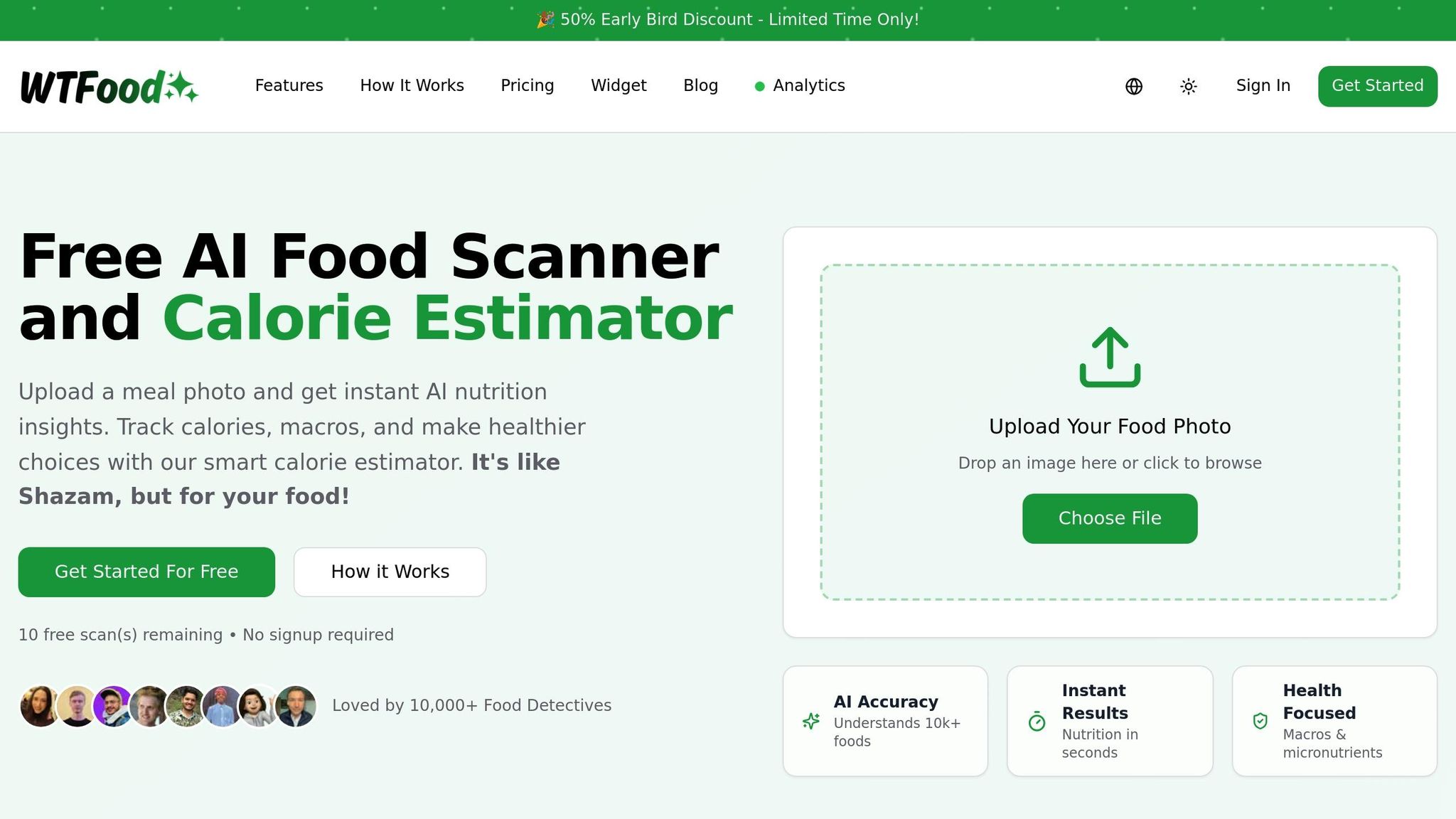
Enter tools like What The Food, a new generation of AI-powered nutrition apps. This free app uses computer vision to analyze meal photos, offering detailed nutritional insights, including calories, macronutrients, portion sizes, and even preparation tips. It also features a recipe generator to help users find meals that align with their calorie goals. By automating food tracking, What The Food tackles one of the biggest obstacles to consistent weight management: the time and effort needed for manual logging.
Research shows that users who log their meals three or more times a day spend just 14.6 minutes daily on tracking but can achieve a 10% weight loss over six months. By combining digital tracking with expert input, tools like What The Food show how AI can make weight management more personalized and effective.
Looking ahead, as AI nutrition technology becomes smarter and more intuitive, platforms like What The Food could play a bigger role in helping users stay on track. To get the best results, though, it’s a good idea to pair AI-driven tracking with professional oversight. A healthcare provider can review AI-generated plans to ensure they’re nutritionally sound and address any gaps in micronutrients. By weaving tools like What The Food into broader healthcare plans, we can unlock even greater potential for AI in weight management.
Dietitian vs ChatGPT: Eating a meal plan made by AI
Conclusion
AI-generated meal plans show great potential for aiding weight loss, especially when combined with human expertise. In a blind test, 67 obesity medicine specialists were asked to distinguish between AI-created meal plans and those from major medical centers. Interestingly, only 7.5% correctly identified the AI-generated plans, highlighting how sophisticated these systems have become. Still, expert input remains essential for the best outcomes.
Data reveals that pairing AI with Medical Nutrition Therapy significantly improves results. For example, 17% of participants achieved at least 5% weight loss within two months, and users relying on this combined approach lost 74% more weight compared to those using fully automated systems. This clearly demonstrates the value of blending technology with professional guidance.
"Any AI-created diet plan should undergo expert review before it is released to the public." - Dong Wook Kim et al., Frontiers in Nutrition
However, safety concerns can't be ignored. AI systems occasionally recommend inappropriate foods, such as high-potassium options for individuals with kidney disease, and often struggle with portion control. These issues contributed to a safety rating of just 6.53 out of 10.
Tools like What The Food offer exciting capabilities, such as meal tracking and instant nutritional analysis from photos. Yet, they are most effective when used as part of a broader weight management plan that includes professional oversight. By blending AI's convenience with expert supervision, users can achieve safer and more sustainable weight loss results.
FAQs
How do AI meal plans help with weight loss compared to traditional diets?
AI-powered meal plans use sophisticated algorithms to deliver dietary recommendations tailored to your specific needs. These plans consider factors like your calorie targets, health metrics, food preferences, and daily schedule. Unlike old-school diet plans that tend to be one-size-fits-all, AI offers real-time adjustments to portion sizes, macronutrient breakdowns, and meal ideas. This personalized approach makes it easier to stick to your goals while still enjoying the foods you love.
Research backs this up: AI-driven meal plans have shown better results in weight-loss studies. Participants in recent trials reported higher adherence and more accurate calorie tracking compared to traditional methods. With real-time feedback and customized tweaks, AI helps users make lasting lifestyle changes.
In the U.S., apps like What The Food take things a step further. You can upload photos of your meals and instantly get calorie and macronutrient breakdowns in familiar imperial units. This feature makes following your meal plan simple and practical in everyday life.
Are AI-generated meal plans safe for weight loss?
AI-generated meal plans can be a handy resource for weight loss, but they come with a few safety concerns worth noting. Studies suggest that while these plans often score well in terms of overall diet quality, they may not always strike the right balance of macronutrients - like protein, fats, and carbohydrates. This imbalance can potentially lead to nutrient deficiencies or overconsumption, which might affect your metabolic health. On top of that, calorie estimates from these tools can sometimes be off by more than 20%, which could unintentionally cause overeating or undereating.
Another issue is that AI tools aren’t designed to consider individual factors like specific health conditions, allergies, or how certain medications might interact with your diet. Depending on them without professional input could result in meal plans that fail to address your unique needs - or even worsen existing health concerns. To stay on the safe side, it’s a good idea to treat AI-generated meal plans as a starting point. Pair them with advice from a healthcare professional to make sure they align with your personal health goals and dietary requirements.
How does user engagement influence the success of AI-powered weight loss tools?
User engagement is a key factor in determining how effective AI-powered weight loss tools can be. When people actively use these platforms - by logging meals, participating in challenges, or responding to prompts - the AI can deliver more personalized recommendations. This level of customization often leads to better adherence and improved results. On the flip side, when engagement is low, the advice tends to be more generic, which might not inspire meaningful changes in behavior.
Research backs this up: frequent use of AI tools has been linked to greater weight loss success. For instance, users who regularly log their meals or join challenges are more likely to shed pounds and maintain their progress. Personalized feedback also plays a big role, as it boosts satisfaction and makes it easier to stick with the program in the long run. Apps like What The Food take this a step further with features such as photo-based calorie tracking and recipe suggestions. These tools encourage regular interaction, keeping users motivated and on track to achieve lasting results.