
Free vs Paid Food Tracking Apps: Complete Comparison
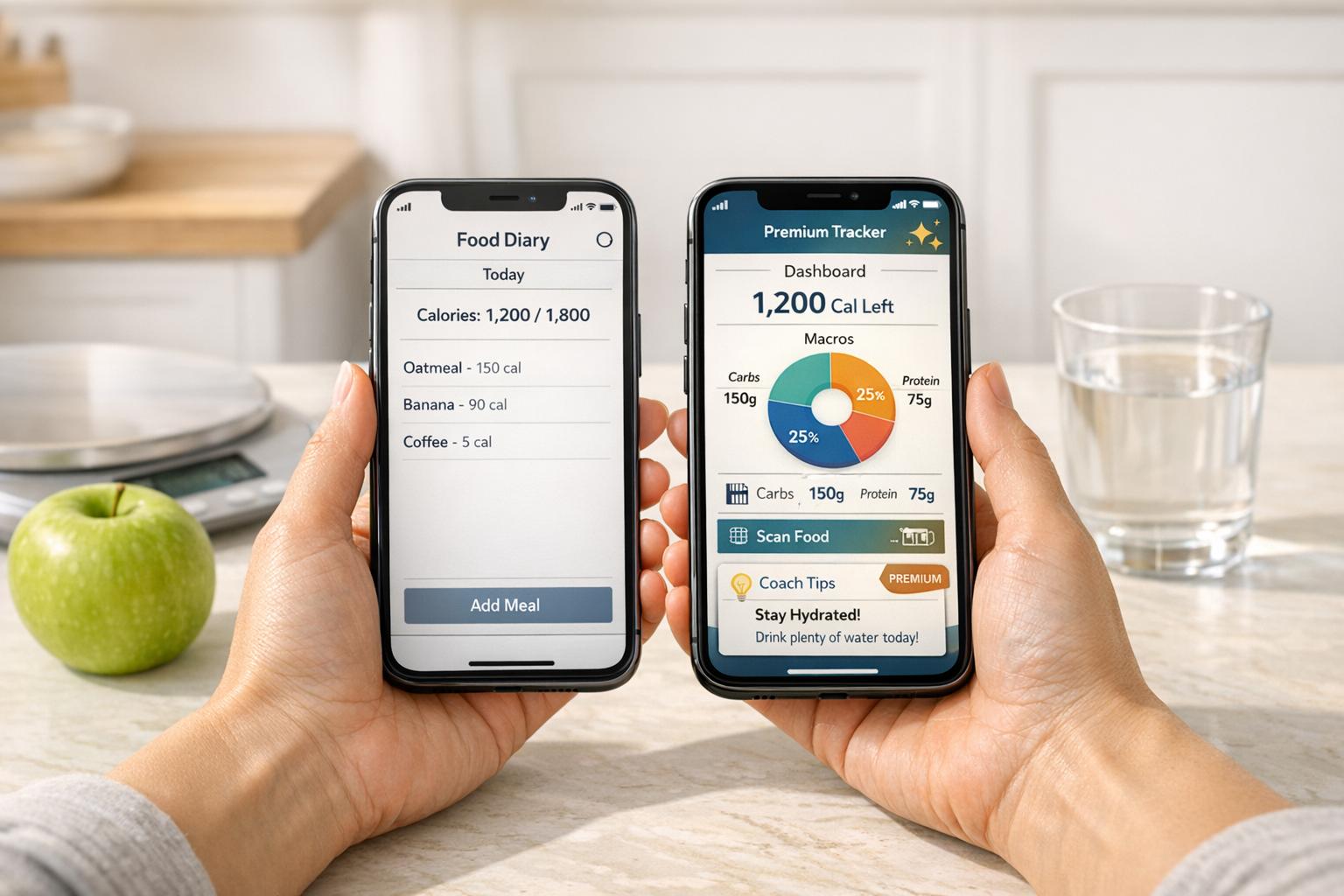
Free vs Paid Food Tracking Apps: Complete Comparison
If you're deciding between free and paid food tracking apps, here's the bottom line: free apps are great for basic tracking, while paid options save time and offer more accuracy. The choice depends on your goals and how much effort you're willing to invest.
Key Takeaways:
- Free Apps: Good for beginners or casual users. They provide basic calorie and macro tracking but often rely on crowdsourced databases (with up to 30% error rates). Manual logging takes longer, and features like AI photo recognition are rare.
- Paid Apps: Ideal for those needing precision or convenience. These apps include verified data, AI tools for faster logging, and advanced tracking (e.g., micronutrients, custom goals). Costs range from $40–$80/year.
Quick Overview:
- Free Apps: FatSecret, Cronometer (solid free features like barcode scanning, macro tracking).
- Paid Apps: MyFitnessPal Premium ($79.99/year), Lose It! Premium ($39.99/year), Cronometer Gold ($49.99–$59.88/year).
Whether you're losing weight, managing health conditions, or training, the right app depends on your priorities. Start with a free version, and upgrade if you need better tools or faster logging.
What Free Food Tracking Apps Offer
Standard Features in Free Plans
Free food tracking apps provide the basics you need to monitor your meals without asking for payment details. Most come with a search-and-select interface, allowing you to log meals using either crowdsourced or verified food databases. They also calculate a calorie budget tailored to your weight goals - whether you’re aiming to lose, maintain, or gain weight. Some apps, like FatSecret and Cronometer, even offer barcode scanning for free, though MyFitnessPal now reserves this feature for paid users.
While macro tracking (protein, carbs, and fats) is often locked behind premium subscriptions, FatSecret and Cronometer include it in their free plans. Cronometer takes it a step further by tracking 82+ micronutrients, such as vitamins and minerals. Social features, like recipe sharing and community challenges, also appear in some free apps. Notably, research suggests these social aspects can increase user retention by 29% over a 12-week period.
However, free apps require a bit more effort. Logging meals manually takes about 1–2 minutes per meal, which can feel tedious over time. This added time commitment is a major reason why 73% of people who stop tracking say it’s "too time-consuming". While these apps provide valuable tools, they come with clear trade-offs.
Where Free Plans Fall Short
Free food tracking apps, while useful, often sacrifice accuracy and convenience. One of the biggest issues lies in their reliance on crowdsourced databases, which can have error rates as high as 30%. In contrast, verified databases have much lower error rates, ranging from 5–8%. This lack of precision can erode trust and make it harder to rely on these tools for accurate nutritional insights. For example, MyFitnessPal’s free plan now limits users to just five food entries per day. As one editorial put it:
"The 5-entry limit transformed MyFitnessPal's free tier from 'generous' to 'demo.'"
- Amy Food Journal Editorial
Additionally, free plans usually lack advanced features like AI-powered photo recognition, meaning you’ll need to manually search for every ingredient. Many free apps are also ad-supported, which can clutter the interface and slow down usability. For those managing medical conditions or training for athletic goals, these limitations can make free plans feel more like a hassle than a help.
sbb-itb-034be4e
What You Get with Paid Food Tracking Apps
Premium Features Explained
Investing in a paid food tracking app gives you access to advanced tools that make logging meals quicker and more accurate. For instance, many premium plans include AI-driven photo scanning, which can cut entry time down to just a few seconds. Apps like MyFitnessPal Premium ($79.99/year) and Lose It! Premium ($39.99/year) allow unlimited barcode scanning - a feature often limited in free versions.
Another key benefit is detailed nutritional tracking. Instead of simply showing macros as percentages, premium plans let you track protein, carbs, and fats in grams, with options to set personalized daily or even meal-specific targets. For example, Cronometer Gold ($49.99–$59.88/year) tracks up to 84 nutrients, including vitamins, minerals, and amino acids. This level of detail is especially helpful for those on restrictive diets or managing health conditions. MacroFactor ($71.99/year) takes it a step further by using adaptive algorithms that adjust calorie targets based on your actual weight trends.
Premium plans come with other perks, too, like ad-free experiences, priority customer support, and the ability to export data as CSV files for deeper analysis. Some apps, such as MyFitnessPal Premium+, even include meal prep features and grocery shopping integrations. For users with specific health concerns, like diabetes or PCOS, many paid plans sync with Continuous Glucose Monitors (CGMs), offering real-time insights into how foods affect metabolic responses. These features not only make tracking easier but also improve the accuracy and reliability of your data, which can lead to better results.
Why People Pay for Premium Plans
The added precision of premium plans is a big draw. These subscriptions often rely on lab-verified data, which is crucial for users who need accurate nutritional tracking for medical purposes or athletic performance. Studies show that apps equipped with AI-assisted tracking tools help 64% of premium users maintain behavior changes for 6–12 months, compared to just 23% for those using manual methods.
Consistency is another major factor. AI-powered tools encourage users to stick with their tracking habits 25% longer than manual entry methods. As the team at CalorieCue explains:
"The best calorie tracker isn't the one with the most features - it's the one you'll still be using a month from now."
For those whose health depends on precise tracking, premium plans often include access to professional support. Platforms like Nourish and Fay connect users with registered dietitians who provide tailored medical nutrition therapy. Many of these services are even covered by insurance, making them a practical choice for managing conditions like diabetes or PCOS.
MacroFactor vs Free Apps (2026) | Is It Worth Paying For?
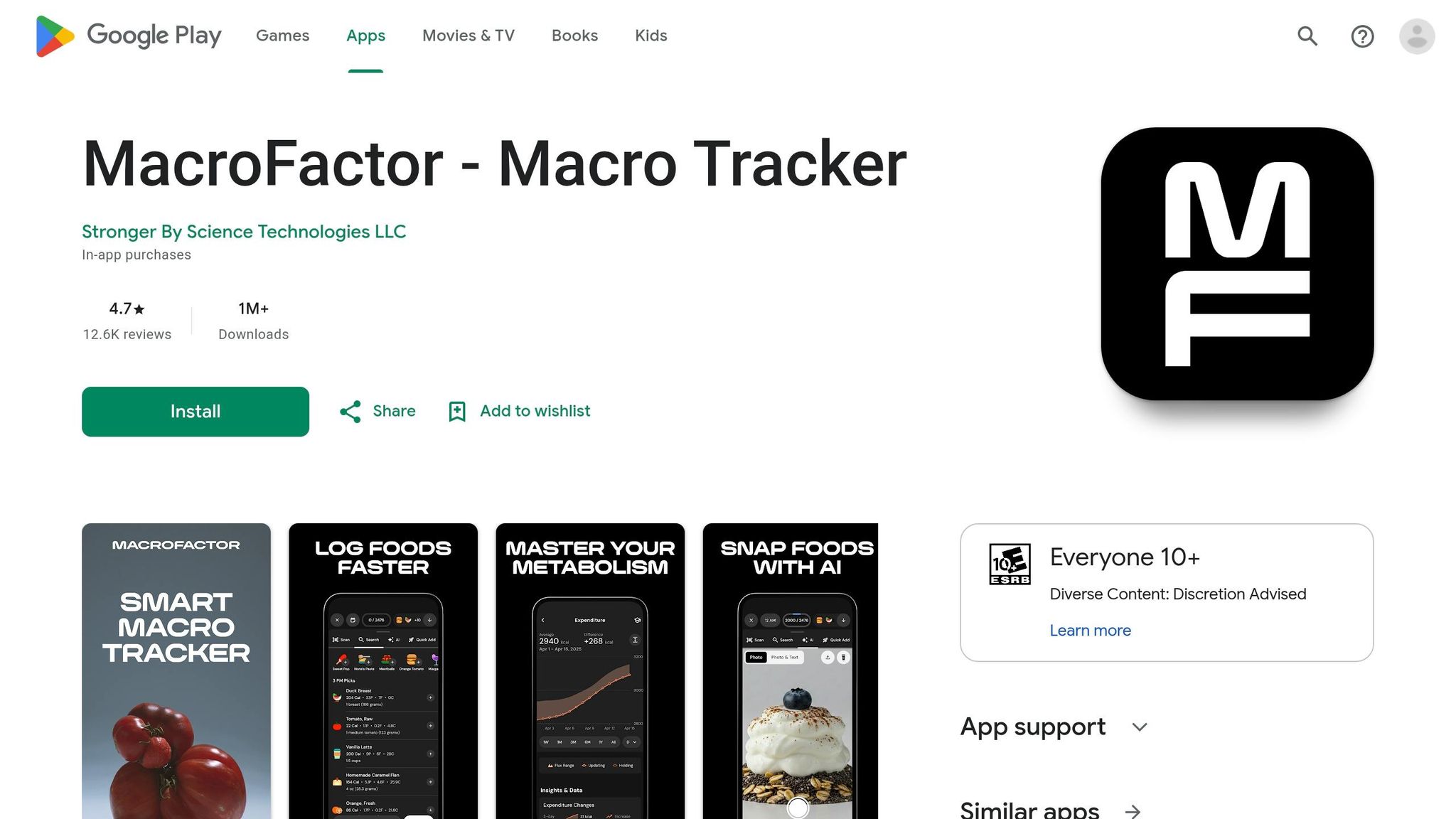
Free vs Paid: Side-by-Side Comparison
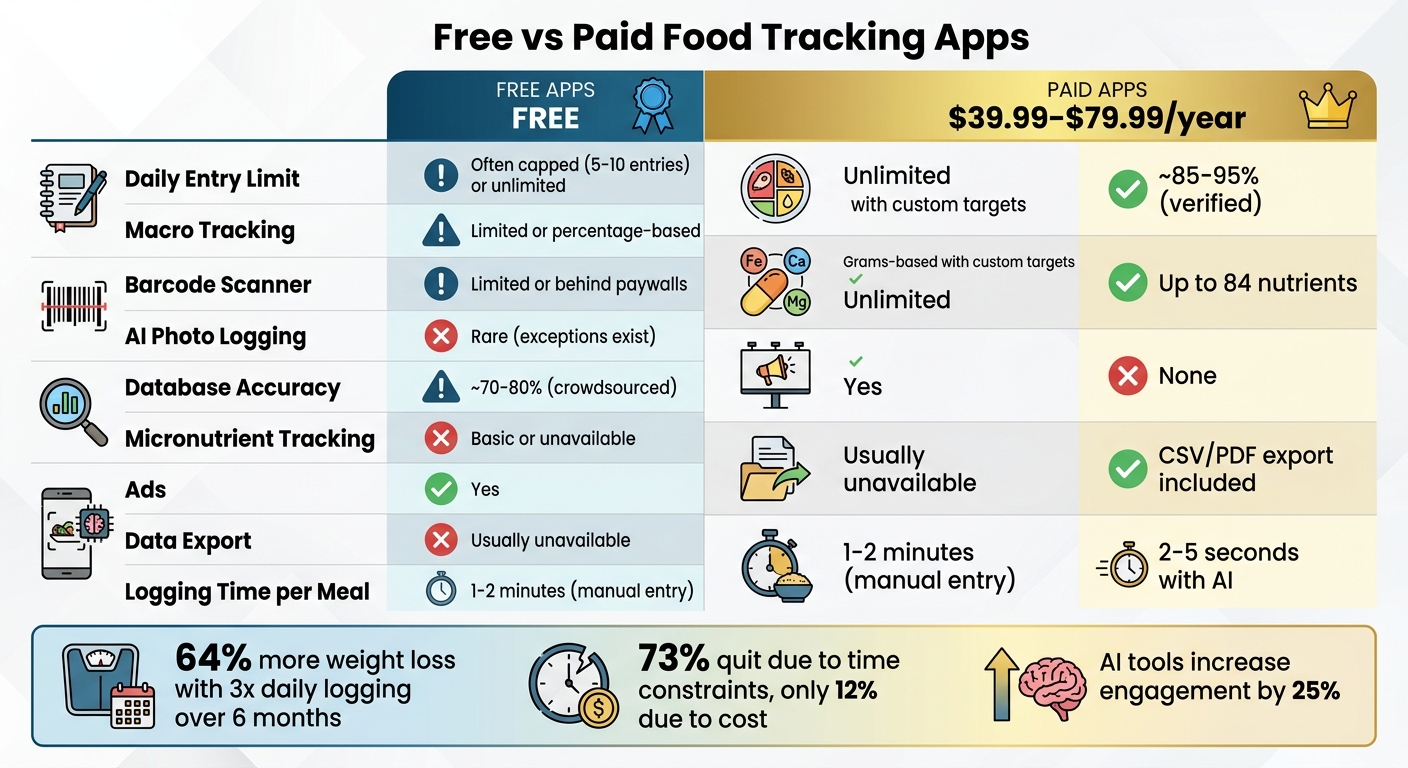
Free vs Paid Food Tracking Apps Feature Comparison 2026
Feature Comparison Table
By 2026, the gap between free and paid food tracking apps has become more noticeable. While free apps like FatSecret and Cronometer still offer solid options - such as unlimited logging and barcode scanning - many free tools impose usage limits, making them feel more like trial versions than complete solutions.
The main differences lie in speed, accuracy, and features. Free apps often depend on crowdsourced databases, which have error rates ranging from 12% to 30%. In contrast, paid versions typically use verified or lab-tested data, reaching accuracy levels between 85% and 95%. Additionally, AI-powered photo logging - a feature that drastically cuts down entry time - is generally locked behind paywalls. However, newer apps like Nutrola and Chowdown are starting to offer this feature for free.
These differences significantly affect how efficiently users can track their meals and the reliability of the data. Here's a quick comparison:
| Feature | Free Apps | Paid Apps ($39.99–$79.99/year) |
|---|---|---|
| Daily Entry Limit | Often capped (5–10 entries) or unlimited | Unlimited |
| Macro Tracking | Limited or percentage-based | Grams-based with custom targets |
| Barcode Scanner | Limited or behind paywalls (e.g., MyFitnessPal) | Unlimited |
| AI Photo Logging | Rare (exceptions: Nutrola, Chowdown) | Standard in premium plans |
| Database Accuracy | ~70–80% (crowdsourced) | ~85–95% (verified) |
| Micronutrient Tracking | Basic or unavailable | Tracks up to 84 nutrients (e.g., Cronometer Gold) |
| Ads | Yes | None |
| Data Export | Usually unavailable | Includes CSV/PDF export |
| Logging Time per Meal | 1–2 minutes (manual entry) | 2–5 seconds with AI or 1–2 minutes manually |
Studies show that logging meals at least three times a day can lead to 64% more weight loss over six months compared to inconsistent tracking. However, 73% of users stop tracking because manual entry takes too much time. This is why apps with features that reduce logging effort - like AI tools or better interfaces - keep users engaged 25% longer than traditional manual-entry apps.
For users who are okay with ads and just need basic calorie tracking, free apps like FatSecret (rated 4.6/5 with over 50 million downloads) or Cronometer are excellent choices. But for those managing medical conditions, training seriously, or looking to save time, the $40–$80 annual investment in premium plans often proves worthwhile. Research emphasizes that consistency is the key to successful weight management, and choosing an app with the right features can make all the difference.
AI Food Recognition: How Free and Paid Apps Compare
AI-powered food recognition has transformed meal logging, slashing the time it takes to record meals. However, the availability of this feature often depends on whether you're using a free or paid app. For example, popular platforms like MyFitnessPal (priced at $79.99/year) and Lose It! ($39.99/year) reserve AI photo logging for premium users. This feature allows meals to be logged in just 10–30 seconds per entry, a significant improvement over the 3–5 minutes typically required for manual logging via database searches.
While speed is a major advantage, accuracy is just as important. Top AI scanners can correctly identify 92–97% of simple dishes, though their performance drops to around 50% when dealing with more complex, homemade recipes. Federica Amati, Head Nutritionist at Zoe, highlighted the precision of their tool:
We compared [AI photo logging] to manual logging, and it is above 95% in terms of accuracy match, so we're the first validated photo-logging tool on the market.
Free apps, on the other hand, often provide limited AI functionality or skip it entirely, underscoring the gap between free and premium services. For instance, FatSecret offers basic photo recognition at no cost, while newer apps like Nutrola include AI photo and voice logging even in their free versions. This reduces meal logging time from about 45 seconds to under 20 seconds. However, many free plans still rely heavily on manual entry.
The time-saving benefits of AI don't just make logging easier - they also improve long-term engagement. Research shows that users of AI-assisted tracking apps are 64% more likely to stick with their logging routines over 6–12 months, compared to just 23% for those using manual methods. Additionally, AI tools save users roughly 5 minutes per day, which adds up to over 30 hours annually. Whether this time savings is worth the $40–$80 yearly cost depends on personal priorities. Still, data suggests that AI-powered apps keep users engaged 25% longer than manual-entry alternatives.
Next, we'll dive into how these AI advancements enhance the overall user experience.
User Experience: Free vs Paid Apps
The experience of using free food tracking apps compared to paid ones can feel like night and day. Free apps often come with banner ads and pop-ups that clutter the screen, making the interface less user-friendly. On the other hand, paid versions provide a clean, uninterrupted environment, which is a game-changer when you’re trying to log meals quickly. Free apps might even throw in upsell screens and sales funnels that disrupt your workflow - something you won’t have to worry about with premium plans.
Logging speed is another area where paid apps shine. Free apps typically require about 45 seconds to manually input a meal, while paid apps use AI to cut that time down to around 20 seconds. This faster process directly addresses one of the biggest complaints users have: tracking takes too much time. Experts agree that long, complicated processes can discourage people from building consistent habits.
Customization is another standout feature of paid apps. Free versions usually stick to basic calorie targets or fixed macro percentages. In contrast, premium plans let you fine-tune everything, from setting macro goals in grams to creating multiple goal profiles. Some even allow you to track a wider range of micronutrients or use algorithms that adjust targets based on real-time data. These options not only make tracking easier but also keep users engaged over the long term - something that’s crucial for building lasting habits.
Support services also differ greatly. Free apps typically rely on community forums or FAQ pages, leaving users to figure things out on their own. Paid plans, however, often include direct access to nutrition experts and proactive guidance. Depending on the level of support, costs can range from $40 to over $200 annually.
These differences in user experience highlight how paid apps offer more streamlined, personalized, and supportive tools, tying back to the broader comparison of free and premium features.
How to Choose Between Free and Paid Plans
Picking the right app plan depends on your goals and how much effort you're willing to put into tracking. For weight loss beginners, starting with a free app is usually enough. The focus should be on building the habit of consistent logging rather than worrying about perfection. Apps like FatSecret are great options because they offer solid free features without limiting your daily food entries - perfect for learning the basics.
If your goal is muscle building or athletic performance, a premium plan might be worth it. Tracking macronutrients down to the gram is often essential for body recomposition, and many free apps don’t offer this level of detail. For instance, MacroFactor ($71.99/year) uses adaptive algorithms to adjust calorie targets based on your actual weight trends and metabolism instead of relying on generic formulas. Research shows that users of AI-assisted tracking apps stick with behavior changes for 6–12 months at a rate of 64%, compared to just 23% for manual tracking methods.
For micronutrient tracking, accuracy is non-negotiable. If you're managing a medical condition or monitoring specific vitamin levels, look for apps with lab-verified food databases. Crowdsourced databases can have error rates as high as 30%, which isn’t reliable when precision is critical.
For those with busy lifestyles, focus on apps that make logging quick and simple. If tracking feels like a chore, try apps with AI features like photo or voice logging that can cut meal entry time down to seconds. This ties into findings that 73% of people who quit tracking say it’s because it takes too much time, while only 12% say cost is the issue. Reducing the effort required to log meals often outweighs concerns about price.
Start with a free plan and upgrade only if you find the premium features - like detailed macro targets, AI logging, or ad removal - are necessary for your goals. Don’t pay for extras you won’t actually use.
Conclusion
Choosing between free and paid food tracking apps ultimately comes down to what fits your needs and budget. Free options like FatSecret and Cronometer offer essential tools such as unlimited logging and macro tracking. On the other hand, premium apps - costing around $40–$80 per year - add benefits like faster, AI-driven logging, verified data with higher accuracy (approximately 85% compared to 70% for free tiers), and an ad-free experience.
These differences play a big role in shaping your tracking experience. Studies suggest that most people stop logging meals due to time constraints rather than cost. If the process feels time-consuming, a premium app that speeds up entries could help you stick with it.
"The question is not 'which app is cheapest?' but 'which free tier is complete enough to sustain a daily tracking habit without friction?'" – Amy Food Journal
Think about your specific needs. If you're not aiming for medical-level accuracy, a strong free app might be all you need. But if you're tracking micronutrients for health reasons, verified data becomes essential. For goals like weight loss or building habits, starting with a free app can be a practical first step. Use it consistently for a few weeks, and only consider upgrading if you hit a roadblock that affects your progress.
Ultimately, your choice should address any challenges that disrupt your tracking routine. If a free app’s limitations make consistency difficult, upgrading to a premium plan could be worth it. Remember, research shows that logging meals at least three times a day can lead to 64% more weight loss over six months compared to irregular logging. The key to success lies in building and maintaining that habit, no matter which app you choose.
FAQs
When should I upgrade from a free plan to premium?
When the free version of an app starts feeling restrictive, it might be time to consider upgrading to a premium plan. Free versions often come with limitations - like capping the number of daily food entries, restricting features such as barcode scanning or macro tracking, or including ads that can interrupt your experience.
Premium plans, on the other hand, provide perks like an ad-free interface, greater accuracy, detailed analytics, and extra tools like meal planning or AI-powered food recognition. If you're aiming for more comprehensive support to hit your dietary goals, a premium plan could be the right choice.
How can I tell if a food database entry is accurate?
To ensure a food database entry is accurate, start by checking if the data originates from trusted sources like the USDA or databases reviewed by professionals. Avoid relying solely on user-submitted entries, as they can sometimes contain mistakes. For added confidence, cross-check the nutrient details with reliable references or compare several entries to verify consistency.
Is AI photo logging reliable for homemade meals?
AI photo logging can be a handy tool for tracking homemade meals, but it’s far from perfect. Its accuracy can vary quite a bit, with error rates sitting anywhere between 10% and 40%, depending on how complex the dish is and the quality of the photo. For instance, straightforward foods like a banana or an apple tend to be identified correctly more often, while mixed or homemade dishes - like casseroles or stews - pose a much bigger challenge.
When using AI for meal tracking, it’s a good idea to double-check its estimates, especially for homemade meals. Factors like portion sizes and hidden ingredients can throw off the accuracy, which might affect the overall reliability of your tracking over time.
Related Posts
Beginner's Guide to AI-Powered Macro Tracking
Estimate calories, protein, carbs, and fat from meal photos; fix portions and hidden fats, and track weekly trends with AI-assisted logging.
Manual vs AI Food Tracking: Which Method Works Better?
Manual tracking gives near-exact calories; AI photo logging is faster and boosts consistency—often a hybrid approach works best.
How Many Calories Are in a Slice of Pizza?
Typical cheese slice ≈285 kcal; slices range 170–700+. Size, crust, cheese, toppings and sodium drive the calorie difference.
How Many Calories Are in Common Fruits? A Complete Guide
Calories in common fruits by serving and per 100 g, plus tracking tips, dried fruit and avocado calorie differences.