Best AI Tools for Meal Image Analysis
Best AI Tools for Meal Image Analysis
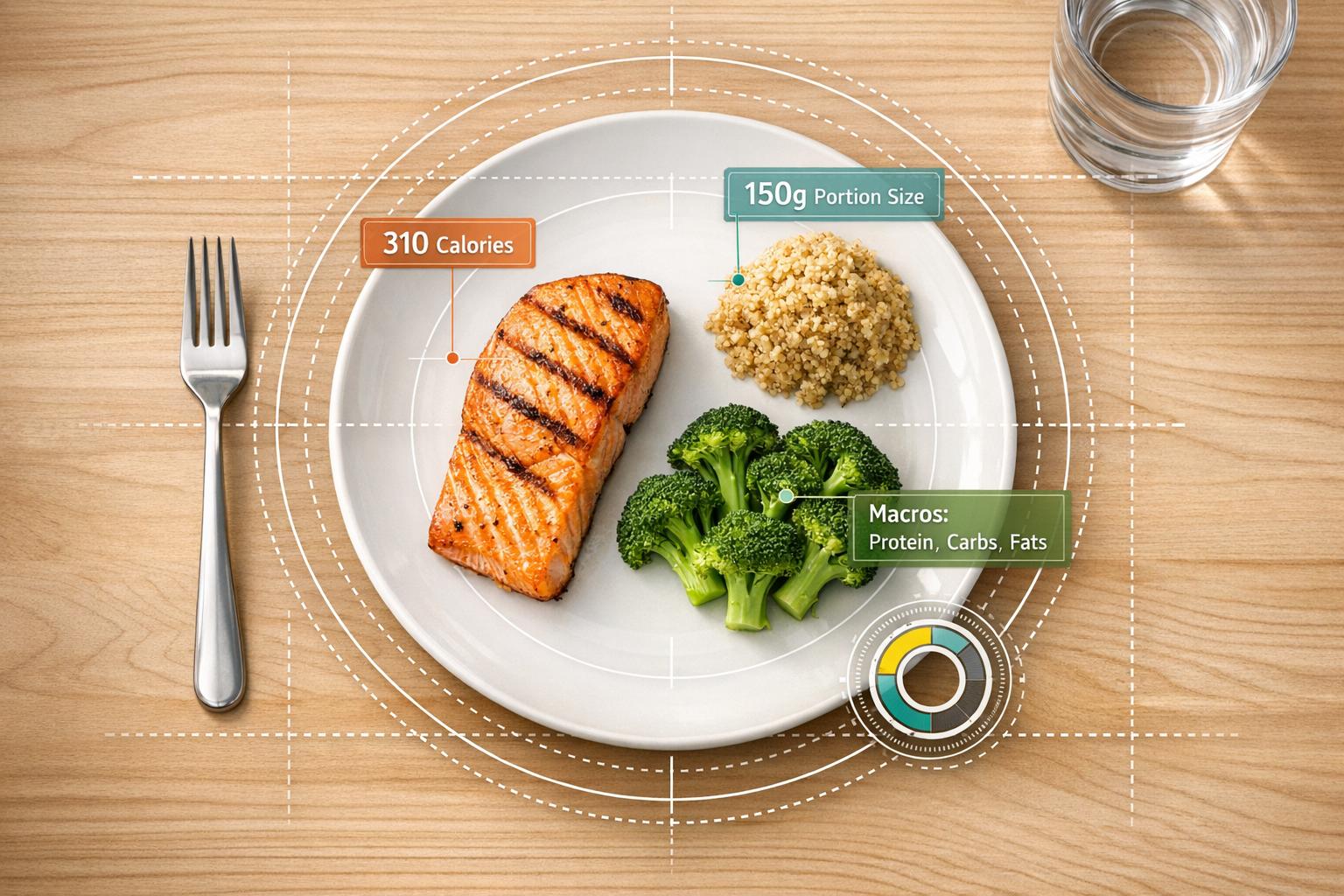
AI-powered meal image analysis has revolutionized food tracking. By snapping a photo, you can get a full nutritional breakdown in just seconds. These tools are faster, more precise, and easier to use than manual logging methods, making them ideal for anyone looking to improve their diet, track fitness goals, or manage medical conditions.
Key highlights:
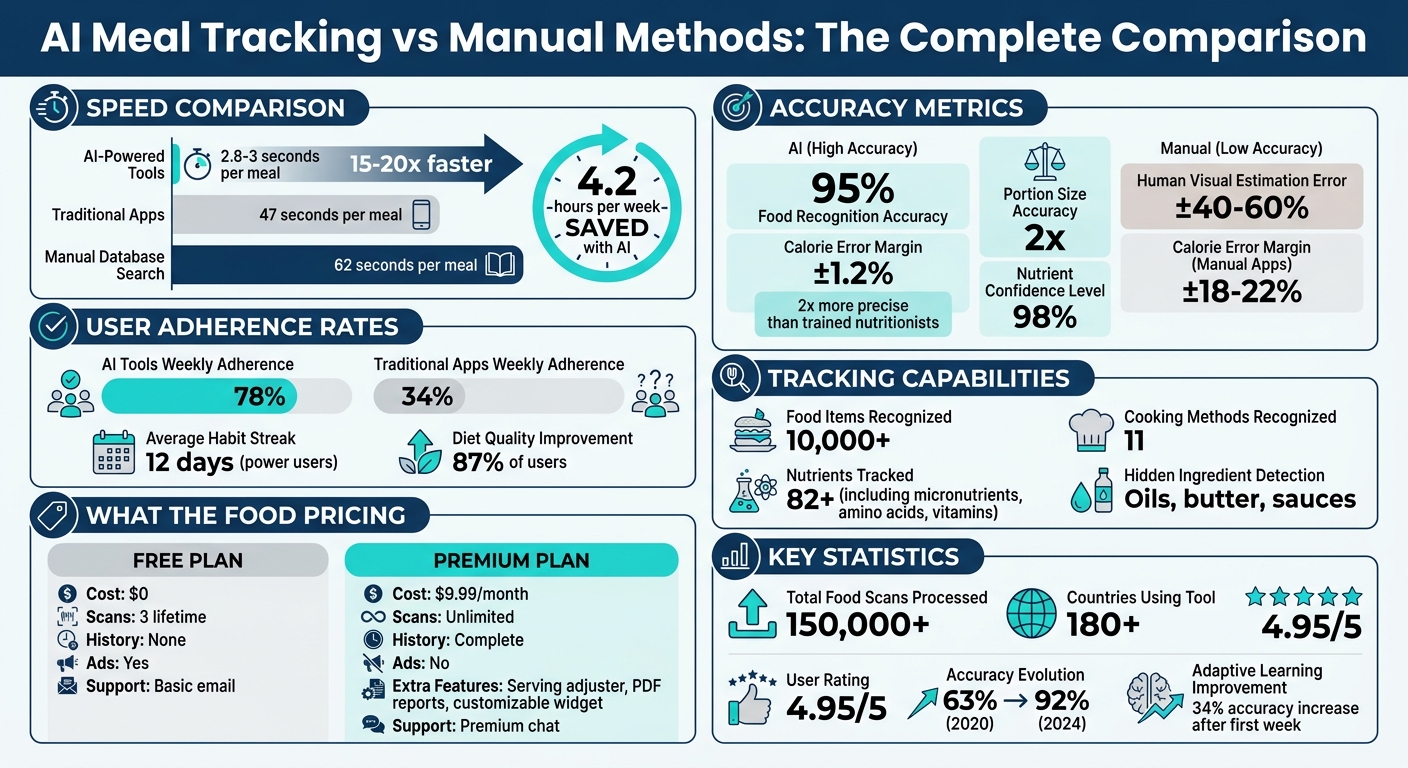
- Accuracy: Identifies foods with up to 95% precision and calculates calories with error margins as low as ±1.2%.
- Speed: Logs meals in 2.8–3 seconds, saving users 4.2 hours per week compared to manual methods.
- Portion Estimation: Uses 3D volume and plate geometry to assess portion sizes - no food scales required.
- Nutrient Tracking: Analyzes up to 82+ micronutrients, including vitamins and amino acids.
- Consistency: Users achieve a 78% weekly adherence rate, doubling traditional methods.
One standout tool, What The Food, offers:
- Free Plan: 3 lifetime scans, basic features.
- Premium Plan: $9.99/month for unlimited scans, ad-free use, serving adjusters, and PDF reports.
AI tools are transforming meal tracking by combining speed, precision, and convenience. Whether you're an athlete, a health-conscious individual, or managing a medical condition, these tools simplify nutrition tracking and help you stay on track.
AI Meal Tracking vs Manual Methods: Speed, Accuracy & Features Comparison
I Tested AI Calorie Scanners… Most Were WRONG
sbb-itb-034be4e
What The Food: AI-Powered Meal Image Analysis
What The Food is an AI-driven tool designed to simplify meal tracking. Just snap a photo of your meal, and in about 12 seconds, you'll get a complete nutritional breakdown. With over 150,000 food scans processed and an accuracy rate above 95%, it’s a reliable option for anyone looking to track their diet effortlessly.
The tool identifies more than 10,000 food items, providing detailed information on calories, macronutrients, and essential micronutrients. But it doesn’t stop there - it can also transform meal images into step-by-step cooking instructions, complete with ingredient lists and portion recommendations. Plus, users can invite coaches or nutritionists to view their data in real time, enabling immediate feedback from professionals.
Main Features of What The Food
The platform’s standout feature is its ability to scan and analyze meals quickly, eliminating the hassle of manual data entry. It not only identifies foods but also estimates portion sizes and calculates nutritional values with a 98% nutrient confidence level, verified against trusted food databases.
An automatic nutrition journal ensures your scans sync across devices, making it easy to maintain consistency. On average, power users sustain a 12-day habit streak. Additionally, the AI-powered recipe generator lets users recreate restaurant dishes at home by analyzing photos to extract ingredients and cooking steps.
For those with specific dietary goals, the tool offers personalized meal planning options tailored to plans like Keto, Balanced Vegan, Diabetic-Friendly, or Athlete Fuel. It’s accessible on both web and mobile browsers and doesn’t require a credit card to use the free account. With users spanning over 180 countries and a stellar 4.95/5 user rating, it’s clear this platform resonates with a global audience.
Advantages of Using What The Food
What The Food delivers convenience and precision by providing instant nutritional data. Users no longer need to manually search for information or weigh their food.
Dr. Malik, a Registered Dietitian, shares: "Patients finally understand their nutrition. The visual breakdowns keep them engaged between visits".
The Premium serving adjuster fine-tunes portion sizes for accurate tracking, while a customizable widget offers quick access to essential tools. PDF reports allow users to monitor progress and share detailed data with healthcare professionals.
For athletes and fitness enthusiasts, the tool is a game-changer.
Gemma Ray, RDN and Sports Nutrition Partner, says: "The accuracy and clarity help our athletes understand what fuels their performance. It's like having a dietitian assistant available 24/7".
What The Food Pricing Options
| Feature | Free Plan | Premium Plan |
|---|---|---|
| Cost | $0/month | $9.99/month |
| Scans | 3 scans lifetime (or 3 days) | Unlimited scans |
| Scan History | None | Complete history |
| Ads | Included | Ad-free experience |
| Serving Adjuster | No | Included |
| Customizable Widget | No | Included |
| Reports | No | PDF reports |
| Support | Basic email support | Premium chat support |
The free plan is perfect for trying out the tool’s capabilities, offering three scans to get started. For $9.99/month, the Premium plan unlocks unlimited scans, ad-free use, advanced features like serving adjusters, and detailed reports - all with the flexibility to cancel anytime.
How AI Tools Change Meal Analysis
AI has reshaped how we track meals. Instead of manually noting down every ingredient, users can now simply snap a photo and instantly get detailed nutritional information. This is made possible by convolutional neural networks trained on millions of food images [3,4].
The accuracy of these tools is impressive. While humans estimating portion sizes by sight often have an error margin of ±40–60%, AI tools are about twice as precise as trained nutritionists [4,11]. Some advanced systems report calorie errors as low as ±1.2%, compared to the ±18–22% errors common in traditional manual logging apps [3,4]. AI’s food recognition capabilities have also improved dramatically, with accuracy jumping from 63% in 2020 to around 92% in 2024. These advancements are paving the way for even better speed, accuracy, and personalized meal tracking.
Accurate Nutritional Data Through AI
AI combines several technologies to deliver precise nutritional data. Computer vision identifies ingredients and even complex dishes, while algorithms estimate 3D volume and weight - no physical scale required [3,4]. The system then cross-references its findings with trusted databases like USDA FoodData Central and assigns confidence scores to ensure reliability [4,10].
One standout feature is adaptive learning. During the initial week of use, when users correct errors, the AI learns their portion preferences and cooking habits. This improves accuracy by 34% for future scans [4,16]. It can even detect hidden calories, like oils and sauces, that might otherwise go unnoticed.
For the best results, photos should be taken at a 45-degree angle and about 12 inches above the plate. Including a reference object, like a fork or your hand, also helps the AI estimate portion sizes more effectively. These small adjustments can increase accuracy from 75% to 95% [10,16].
Faster Meal Tracking for Busy People
AI makes meal tracking faster and easier, which is a game-changer for people with packed schedules. Logging a meal with AI takes just 3 seconds on average, compared to 62 seconds for manual database searches or 47 seconds with traditional tracking apps. That means AI-powered logging is roughly five times faster than manual methods.
Top systems can generate a full macronutrient breakdown in just 2.8 seconds - about 15 times faster than doing it manually [3,4]. This eliminates the need for tedious steps like weighing ingredients, searching through databases, or calculating portions. Instead, users can log meals with a single photo, a voice command, or even a quick text description like "two scrambled eggs and toast." Advanced tools can automatically break down mixed dishes or restaurant meals into their individual components [3,4].
Customized Meal Planning
AI doesn’t just track what you eat - it also helps plan your meals based on your dietary needs. Whether you follow Keto, Mediterranean, Paleo, Vegan, or low-carb diets, the AI can generate meal suggestions tailored to your preferences [11,15]. For those with medical concerns, some systems offer doctor-approved diabetic-friendly plans or flag allergens and intolerances in meals [8,20].
The most advanced tools go a step further with adaptive metabolic tracking. These systems analyze your intake and weight changes over time, learning your metabolism and recalibrating calorie targets as needed.
For real-time decision-making, AI assistants can recommend restaurant menu items that fit your remaining calorie and macro goals, making it easier to stick to your plan when dining out. They can even turn food photos into step-by-step cooking instructions, breaking down ingredients and portions to align with your nutritional targets [2,15].
Real-World Uses of Meal Image Analysis Tools
AI-powered meal image analysis has come a long way, evolving from simple calorie counting to becoming a valuable tool for health management, fitness tracking, and personalized meal planning.
Fitness and Health Monitoring
Athletes and fitness enthusiasts are reaping the benefits of AI's speed and precision in meal analysis. These tools help reduce portioning errors and integrate with platforms like Apple Health and Google Health Connect. By syncing nutritional data with other health metrics, users gain a more complete picture of their progress.
Gemma Ray, RDN and Sports Nutrition Partner, notes: "The accuracy and clarity help our athletes understand what fuels their performance. It's like having a dietitian assistant available 24/7".
Interestingly, users of AI-based tracking tools maintain a 78% weekly adherence rate - more than double the 34% average seen with traditional tracking apps.
Managing Medical Dietary Needs
For individuals with medical conditions like diabetes or food allergies, AI meal analysis tools provide essential support. These tools can reliably detect hidden ingredients such as oils, butter, and sauces. A notable example is Emma Muller from Berlin, who used an AI-driven, diabetes-specific meal plan in early 2026. Over a 28-day period, she successfully lost 10 kg (around 22 lbs) and stabilized her blood sugar levels through photo-based meal tracking. The tool’s carbohydrate estimation was so accurate that it matched near-dietitian precision, a claim validated during the American Diabetes Association (ADA) Scientific Sessions in June 2025.
Allergen detection features allow users to set their allergies once and receive automatic warnings before consuming potentially risky meals. These tools go further by tracking over 82 nutrients - including micronutrients, amino acids, and fatty acids - and recognizing 11 cooking methods, offering a detailed breakdown of meals' nutritional value and medical suitability. Users can even invite coaches or nutritionists to review their logged meals in real time, ensuring professional oversight when needed.
Recipe Creation and Meal Planning
AI tools can identify ingredients from a simple photo and transform restaurant meals into step-by-step recipes for home cooking. They also excel at creating personalized weekly meal plans tailored to dietary preferences, whether it's Keto, Vegan, Mediterranean, Paleo, or specialized medical diets for conditions like PCOS or pregnancy. Some services go the extra mile by providing 7-day plans with automated shopping lists and calorie-controlled recipes.
Frequent meals can even be saved as templates, making future logging and meal organization effortless. With the ability to recognize over 10,000 food items from various cuisines, these tools have reportedly improved overall diet quality for 87% of users. By combining convenience with detailed insights, AI meal tracking tools are reshaping how people approach nutrition and meal planning in everyday life.
Conclusion: AI's Role in Meal Image Analysis
AI-powered meal image analysis is transforming how we approach nutrition tracking. By offering quick and precise nutritional breakdowns, it eliminates the hassle of manual logging and drastically reduces errors. This means users can make better dietary choices - whether they're managing a health condition like diabetes, working toward athletic goals, or simply aiming to improve their eating habits.
These tools go beyond just counting calories. They uncover long-term eating patterns with visual insights and automated macro tracking, making it easier to stick to healthier habits. The reduced effort makes sustainable behavior change more achievable, with users often maintaining impressive streaks of consistent tracking.
"Patients finally understand their nutrition. The visual breakdowns keep them engaged between visits."
– Dr. Malik, Registered Dietitian
The blend of speed, precision, and practical insights makes AI-driven meal analysis a game-changer for anyone focused on nutrition. Whether you opt for the free version of What The Food, which includes 3 lifetime scans, or upgrade to the Premium plan at $9.99 per month for unlimited tracking and advanced features, these tools take the guesswork out of meal logging. As AI technology continues to advance, platforms like What The Food will only get better at simplifying nutrition tracking and tailoring dietary advice to individual needs.
FAQs
How do I take photos so meal scans are more accurate?
For the best results when scanning meals, take clear, well-lit photos from multiple angles. Make sure the entire meal and portion sizes are fully visible in the frame. A top-down perspective works best, and try to keep the background free of clutter or distractions. Proper lighting is key - it helps the AI identify ingredients and portion sizes more accurately, which means quicker and more precise nutritional analysis.
Can I correct a wrong scan so it learns my portions over time?
'What The Food' focuses on delivering detailed nutritional insights by analyzing food images. While its emphasis is on providing accurate and validated results for each scan, there’s no clear indication that the app allows users to correct scans to refine its understanding of portion sizes over time. This suggests that precision is a top priority, but it might not actively adapt based on user feedback or adjustments.
Is the Premium plan worth it if I track meals every day?
The Premium plan is a great choice if you're serious about daily meal tracking. It offers over 95% AI accuracy and delivers results in under 2 seconds, making it both fast and reliable for regular use.